



ROBOTICS AND AUTOMATION
The automated warehouse: how warehouse software, control systems and AGVs work together
Buying AGVs is not enough for an automated warehouse. Business, orchestration and execution layers must be joined into one controlled flow.
Bizfix Lab · 21 November 2026 · 5 min read
An AGV needs to know what to do
Many warehouses invest in AGVs, conveyors or automated racking, but each device runs on its own system. The equipment can move, but it does not know which goods to pick, why, or where to put them. People still stand in the middle giving orders and reconciling results.
Three layers of an automated warehouse
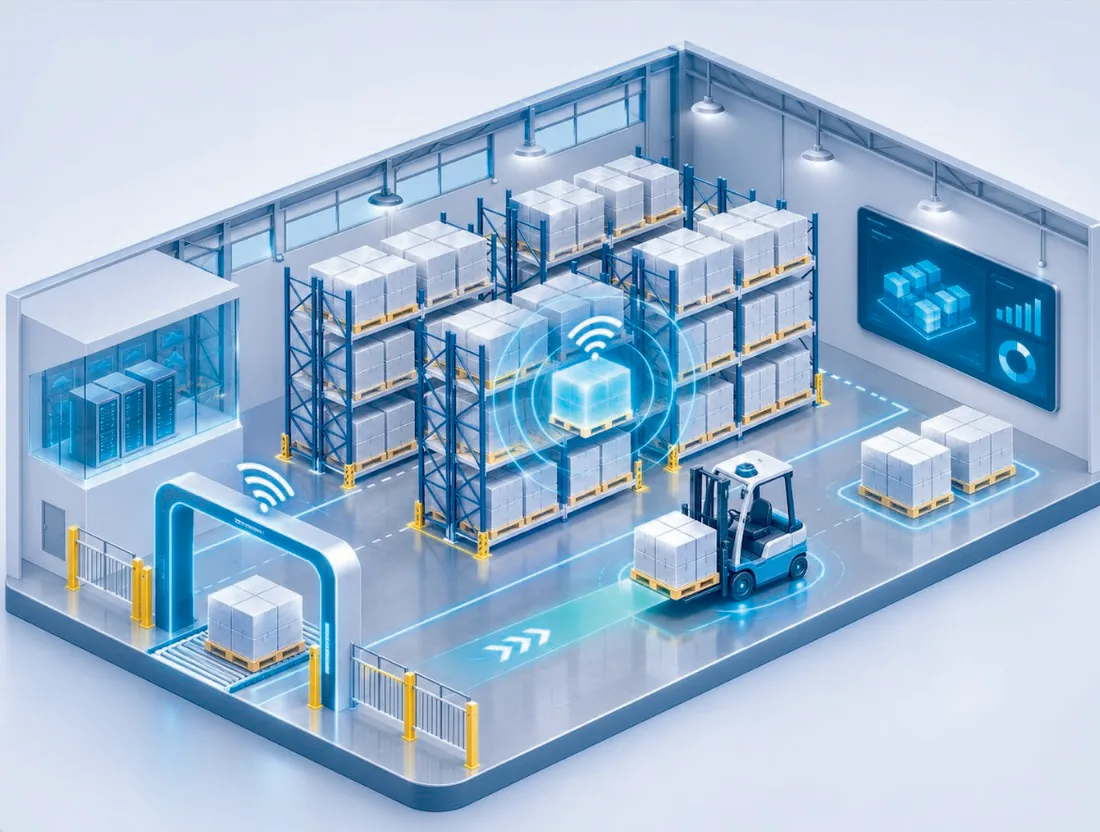
- Business layer, the warehouse management system: stock, pallets, locations, receiving, dispatch and counts. It decides what to do, why and where.
- Orchestration layer, the warehouse control system: receives tasks from the WMS and dispatches equipment in real time. It decides how, when and with which device.
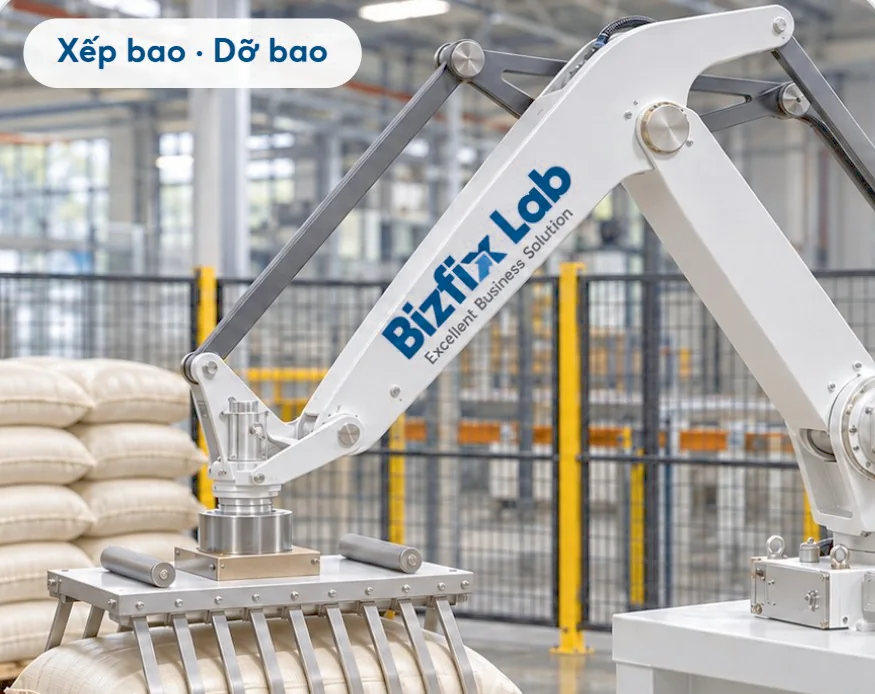
- Execution layer, the equipment: AGVs, mobile robots, conveyors and automated storage move, pick and place goods as instructed.
Why start with the business layer
If stock and location data are not accurate, robots just make mistakes faster. The warehouse must first standardise its processes in software: every pallet has a code, every location is mapped, every move is recorded. With that foundation, handing tasks to machines becomes safe and controlled.
Connecting disconnected systems
The goal is to join separate systems into one flow: a dispatch order from accounting or sales goes down to the WMS, is orchestrated to equipment, and the result flows back up to update stock. People move to supervision and exception handling.
Start with a current-state survey
Bizfix Lab surveys your existing warehouse software, control systems and equipment fleet free of charge, then proposes a suitable integration roadmap, with no obligation.